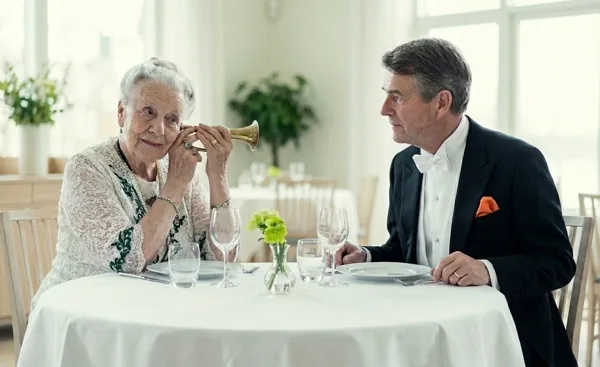
Strategies to sharpen your verbal dexterity at work.

Here’s my take on where you talk past each other when you talk together: What’s meant doesn’t get said. What’s said doesn’t get heard. What’s heard doesn’t get understood. What’s understood doesn’t get done. When we work together, by far the largest part of our communication happens out loud. It’s easier and faster than writing a long email. The tools I describe in this article series meet the need to standardise the spoken communication in your teamwork. It’s especially relevant when you’re facing a colleague you don’t know well, in situations that call for firefighting, or when the task is complex. Here, a standard keeps the message clear even when there’s noise on the line.
Why verbal dexterity matters for teamwork
The word “communication” comes from the Latin “commūnicāre” and means “to share”. One of the key marks of good teamwork is that the team builds a clear, shared understanding of the task, that the task is coordinated, and that the team makes sure the flow of information reaches the right members. On top of that, good teamwork is marked by the team setting up a structure, and by making sure feelings don’t take over and steer the task (M. St Pierre, 2008). The team’s spoken communication is a support function that makes all of this possible.
I’ve described before why shared mental models are so important for our teamwork. A mental model is our understanding of the situation, the task, and what resources we have to work with. When we have to perform together under pressure, it’s absolutely vital that we can share those perceptions out loud. So communication in teamwork also makes sure we’re on the same page. Without a shared understanding, we simply can’t pull together.
The word “communication” comes from the Latin “commūnicāre” and means “to share”.
The toolbox from aviation and the military
My article series draws on the experience of teams that have to be highly reliable. You find these teams in aviation, in operating theatres and in the military, among other places. The advantage is that the military and aviation have worked strategically on standardising spoken communication when there’s “noise” on the line — for more than 50 years. From aviation, for instance, we know that human error accounts for around 70 % of the causes of plane crashes, and that errors in spoken communication top the list (RL. Helmreich, 2000). My guess is that the split is the same in plenty of other workplaces.
That experience is now being translated into healthcare, where in the US alone around 98,000 patients die every year because of treatment errors (J. Pham, 2012). That’s the equivalent of four Boeing 747s crashing every week. In 2013, Danish doctors and nurses in the health service reported more than 180,000 adverse events (M. Hemmingsen, 2014).
Human error accounts for around 70 % of the causes of plane crashes, and errors in spoken communication top the list.
I think the tools should be translated into every industry, because communication errors can cost revenue, earnings and jobs — which is life-threatening for any business. The article series is my take on how you overcome the classic barriers in spoken communication:
I describe each tool thoroughly in its own article. Here’s the overview:
What’s in the toolbox
| What’s meant doesn’t get said | |
|---|---|
| “Fly by voice” | Routinely announcing what you intend to do |
| The CUS programme | A signal that everyone should stop what they’re doing and listen to what you have to say |
.
| What’s said doesn’t get heard | |
|---|---|
| Assertive language |
|
.
| What’s heard doesn’t get understood | |
|---|---|
| Retell it | Get your colleague to retell what you’ve just said |
| Assuming | Don’t assume your colleague reads your hint the way you meant it |
| Give your message structure |
|
| Listening | Are you listening to understand, or listening to reply? |
| “The framing effect” | Be aware of how you present your information |
.
| What’s understood doesn’t get done | |
|---|---|
| Blindfold | A blindfold in teambuilding forces you to:
|
| Checklists | A checklist makes sure you don’t forget anything when you hand over |
| Check-back communication | Your colleague repeats what you’ve said and lets you know when it’s done |
| The 10,000-foot rule | Agree on when you’re allowed to interrupt each other at work |
I think the tools should be translated into every industry, because communication errors can cost revenue, earnings and jobs — which is life-threatening for any business.
Implement one tool at a time
We’re often far too ambitious about what we can put in place in a day — and far too unambitious about what we can manage in a year. That’s why I always recommend implementing one tool at a time.
To the untrained eye, communication can look like a big, woolly topic. There’s no value for you in concluding that “we should be nicer to each other”. For an undefined need, there’s an endless number of tools. So be completely specific about:
- Where do you need to standardise your spoken communication?
- Which tool best fits that need?
Enjoy.
Sources and further inspiration
On Error Management: Lessons From Aviation
RL Helmreich, 2000, British Medical Journal
Erfaringer med at træne ikketekniske færdigheder på et kirurgisk kursus
L. Spanager, 2014, Ugeskrift for Læger
TeamSTEPPS™: Team Strategies and Tools to Enhance Performance and Patient Safety
B. King, 2008, National Center for Biotechnology Information
Reducing Medical Errors and Adverse Events
J. Pham, 2012, Annual Review of Medicine
Staff reported 181,280 adverse events in 2013
M. Hemmingsen, 2014, Dagens Medicin
Crisis Management in Acute Care Settings
M. St Pierre, 2008, Springer