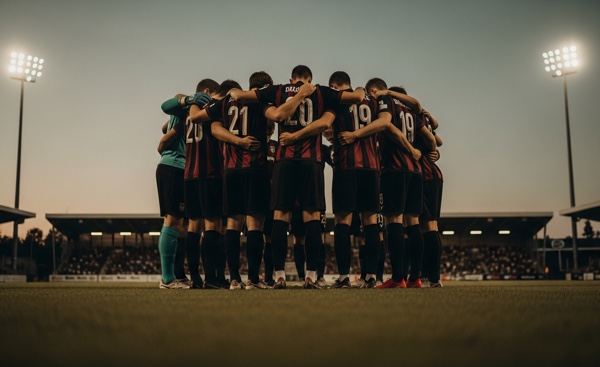
While most of us are on summer holiday, one thing still pulls us to the screen: the World Cup. And this week it happened again – the thing that always leaves the pundits speechless. Germany – four-time world champions, packed with stars from Europe's biggest clubs – were knocked out by Paraguay, who had scraped through as third in their group. Shortly after, Morocco sent the Netherlands home. Both matches were decided on penalties. And both times, the most tightly-knit team was left standing.
It is tempting to call it a coincidence. But the pattern is older than this week's results. Football history is full of star teams that never became teams – Real Madrid's famous Galácticos bought the world's best players and still ran dry of trophies. And the reverse: Denmark in 1992. None of those players were the best in the world. But they were the best in the world at being a team.
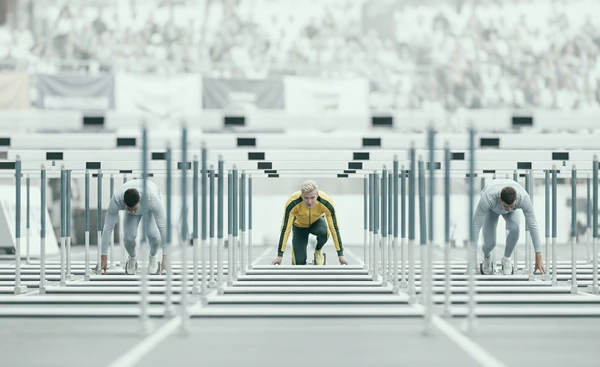
What is striking is how precisely the same pattern repeats at work. Five experts do not automatically make an expert team. You can gather the sharpest specialists in one department and still watch them get overtaken by a less glamorous team that simply makes each other better. Competencies do not add up – they have to play together before they become anything.
Just look at the penalty shootout. It looks like an individual discipline: one player, one ball, one goal. But what decides it is everything around it. The calm to walk up there because you know the team is behind you – whatever the outcome. The safety to take responsibility, because a missed penalty will not make you the scapegoat. That is psychological safety in its purest form: the performance is individual, but the courage is collective.
Your workday has penalty shootouts too. The presentation to the board. The deadline that suddenly moves. The customer pushing on the phone. In those moments, it is not decided by how skilled each person is – but by whether they dare to take the shot, and whether the rest of the team is standing behind them. Cohesion is not about having a nice time together. It is about being able to count on each other when it matters.
And here is the good news: cohesion is not a stroke of luck. It is built – through small, repeated occasions to collaborate on something concrete where success requires one another. Not through speeches about cohesion, but through action. Every time one person reaches out and another catches it, a stone is laid in the foundation.
It also requires knowing your roles – and your shared direction. Most teams do not stumble over a lack of talent, but over the same five obstacles: trust, conflict, commitment, accountability and focus. Paraguay did not beat Germany because they had better legs. They beat them because all eleven knew exactly what to do – and trusted the other ten to do the same.
And as a leader? You set the tone. If a missed penalty costs a place on the team, nobody volunteers to take the next one. If mistakes are treated as shared learning instead, you grow players who dare to take responsibility when it is hardest. That is the difference between a team playing not to lose – and a team playing to win.
Stars decide matches. Cohesion decides tournaments. So next time you put together a project, a department or just next week's rota, remember this week's lesson from the World Cup: it is not the eleven best who win. It is the best eleven. Shall we play ball?
Frequently asked questions
Why do tightly-knit teams often beat star teams?
Because team performance is not the sum of individual competencies but the product of how they interact. A tightly-knit team plays to each other's strengths, covers each other's weaknesses and keeps its calm under pressure – while a star line-up without cohesion is often eleven one-person businesses in the same shirt.
What can a work team learn from a penalty shootout?
That even the most individual performances are collective. The person taking the shot performs best with a team at their back, where a mistake does not make anyone a scapegoat. Psychological safety is the precondition for anyone daring to take responsibility when the pressure peaks.
How do you build cohesion in a team of strong individualists?
Through concrete, shared tasks where success requires one another – not through speeches about cohesion. Create small, repeated occasions to collaborate, make roles and shared direction clear, and treat mistakes as shared learning. Cohesion is built through action.
Are team-building exercises enough to create cohesion?
A single day of exercises can open doors, but cohesion is built in everyday work: in how you run meetings, share information and catch each other's mistakes. Choose efforts that change the everyday interplay – not just the mood of one afternoon.